Things I'm thinking about in 2026
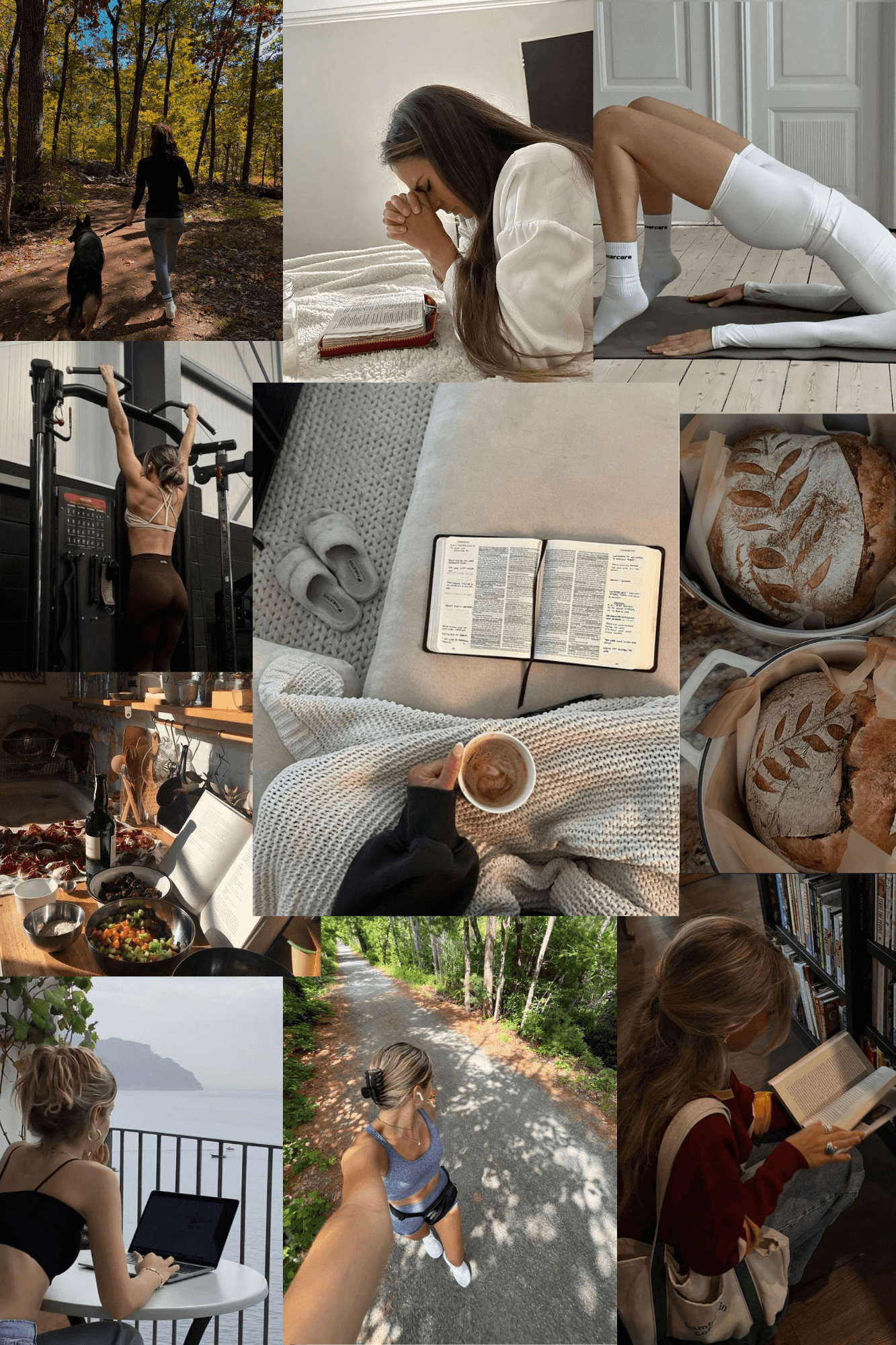
In my experience, everyone who has strong opinions about the New Year as a holiday fits into one of two categories: 1) They think it’s ridiculous that people wait until the New Year to make necessary changes in their life, are violently opposed to resolutions (either in principle or as a result of their own failed resolutions), and see it solely as a marker of time passing, or 2) They appreciate the collective motivation of so many people to change themselves for the better and are generally in favor of making some sort of goals or resolutions, sometimes accompanied by vision boards and end-of-year reflection journaling.
Personally, I tend to land somewhere in the middle. Yes, I do think it’s silly to wait for the New Year to make changes that you could and should have made already. But on the other hand, dedicated reflection time with a cutesy Pinterest vision board (in a non-manifestation-woo-woo kind of way) to go along with it doesn’t seem all that bad to me.
I don’t like to make ultra-specific resolutions. Over the course of an entire year, it’s highly unlikely that a person’s priorities won’t shift, and I prefer to give myself a little more flexibility for that. However, after reflecting on the massive amount of changes and lessons learned in 2025, there are a few things at the forefront of my mind going into 2026.
~
1. Surrender. If you’ve read pretty much anything else I’ve written, you know that I started my journey with Christ in 2025. A big part of that journey has been recognizing and dealing with my perceived need to be in control.
Before coming into faith, I would’ve characterized myself as a naturally anxious person. Though that’s not entirely inaccurate, I do see an issue in identifying with something that is categorically and Biblically negative.
Christians are instructed to take their thoughts captive (2 Corinthians 10:5). We are told not to worry, and to lean on God instead (Philippians 4:6-7). When Jesus and His disciples are in the middle of the choppy ocean, He scolds them when they panic and wake Him – not because they disturbed His nap, but because they didn’t trust Him to lead them to safety (Matthew 8:26). I am not even close to drowning in the ocean (praise God), and yet here I am, worrying constantly, fidgeting, fussing, allowing my brain to churn and burn, over something that definitely isn’t that important anyway.
There are so many powerful verses instructing us to trust in God rather than sit in anxiety. That trust is an act of surrender that I find extremely difficult. But the more I’ve thought about this, the more I know that I need to get to work on it ASAP. I see more and more how my desire for control interrupts my day-to-day life and interferes in my relationships, including the one I’m building with God, and I simply cannot allow that to continue.
Thank God that I have Him to help me with this, because I wouldn’t be able to do it on my own.
2. Meditation. Previously, when I sought help dealing with anxiety, I was repeatedly directed toward the practice of meditation. I watched tons of videos, listened to sound bath music, sat in silence, and tried to clear my mind. I always assumed I just never figured out how to do it right because it didn’t have any lasting impact.
Imagine my surprise when I came across the word “meditate” during my Bible reading. Psalms 1:1-2 reads,
“Blessed is the one who does not walk in step with the wicked or stand in the way that sinners take or sit in the company of mockers, but whose delight is in the law of the Lord, and who meditates on His law day and night.”
That’s a dramatically different type of meditation than the mainstream “clear your mind” approach.
I’m still working on the “day and night” part, but I did recently try sitting in silence after reading and prayer, and wow, what a difference. I opened my eyes and actually felt filled and recharged. Apparently silent time with God is a lot more productive than trying – and failing – to passively observe my thoughts. 10/10 recommend and will be continuing in 2026.
3. Hormonal health. As a teenager, I had atrocious PMS symptoms and painful period cramps. Without fully considering the potential consequences, my 17-year-old self opted for the band-aid fix in the form of a little red pill.
As I got older, I started hearing more and more about the downsides and potential long-term effects of the birth control pill. I contemplated getting off, but I was scared. There were so many horror stories of women who did it and wound up gaining weight, losing hair, struggling with depression, dealing with acne, and the list goes on. Plus, I actually had a relatively positive experience on birth control; I felt like my mood was more stable, and my cramps were way more manageable. Getting off just didn’t sound great.
In the end, though, I decided to stop prolonging the inevitable. I didn’t know who I was without the manufactured progesterone and estrogen anymore. I made the leap in February 2025, and though I haven’t had a long list of terrible side effects, I’m still in the process of trying to support my body as it attempts to reach a normal, healthy hormonal state.
In 2026, I really want to focus on learning more about the menstrual cycle. I already read Dr. Jolene Brighten’s Beyond the Pill, which has been an incredible resource. However, I know I could and should be doing more to help my body return to its natural rhythm and support my future fertility. My diet, exercise, and supplementation routine will all be influenced by everything I can possibly learn about women’s hormonal health.
4. Sustainable exercise routines. Like most people, I’ve sometimes struggled to build a consistent exercise schedule. There are so many fitness nuts out there, most of which are telling you they’ve found the new optimal formula for cardiovascular health, building muscle, longevity, or some other fitness goal. It gets overwhelming to even think about building a structured routine.
I love fitness, and I’m actually pretty lucky in that I enjoy most types of exercise (running and cycling excluded). But sometimes I get wrapped around the axel trying to build a super intense, structured routine that just doesn’t leave much room for life to happen.
Since I know from experience that this approach just doesn’t work, I really want to be thinking about one that does. The important thing here is to take care of the body God gave me, and to do that, I need to find the right balance of discipline and grace, heavy lifting and gentle movement, high-intensity cardio and casual jogs.
I don’t know what exactly that mix is going to look like. But no matter what, it has to be sustainable. If it isn’t, overall health isn’t the goal, when really, that’s all that should matter.
5. Consumerism and overconsumption. Despite my relatively-offline life, even I’ve seen some of the overconsumption content floating around the internet in 2025. Closet cleanouts, massive shopping hauls, water bottle collections (with accessories, of course), constant restocks of useless crap… it feels like it’s never-ending.
The amount of waste produced by Americans’ irresponsible spending is so disheartening to even think about. And influencer culture just exacerbates it, deluding people into thinking they need to own the same overpriced garbage and play into some most-likely-very-ugly microtrend.
I don’t need to harp on this – we’ve all seen the “pick my Stanley for the day” videos. But I, like many people, am seeing more and more just how gross this culture is, and am thinking a lot more about my own spending habits because of it.
6. Cooking actual meals and dishes. Since I started cooking for myself, my approach generally looks something like this: 1) Pick my protein; 2) Pick my side dishes; 3) Eat and go about my day. Rarely does anything I make resemble an actual dish, let alone a true, thought-out meal. And that’s fine – I get the macros I need and do my best to fuel my body well.
But I do think there’s something really beautiful about intentionally curating a whole meal. Rather than poking around in the fridge for the minimum viable side dish for my slab of steak or filet of fish, I could take the time to make a risotto or a salad or something complementary that actually goes with the flavors on the plate.
Heck, I could even experiment with different cuisines. My dad, for example (if you’re reading this, hi dad!!), has been really leaning into various Asian-inspired dishes, including delicious beef chow fun and other stir-fries. What’s stopping me from doing that, other than my own lazy cooking habits?
Therefore, I’ve decided that 2026 is going to be a year of actual meals. More curation, less plates of disjointed food. Wish me luck.
7. Long-form content consumption. We all know that short-form content is ruining the attention spans of an entire generation. TikTok, Instagram reels, and YouTube shorts are just too addictive. I even saw a Substack post recently that said something along the lines of, “My attention span is so bad that I’m actively trying to watch more TV.” Oh, how far we’ve fallen.
I already limit my short-form content consumption quite a lot, and I guarantee I’m better off for it. But I’ll be the first to admit that having constant access to any online content, including long-form like YouTube videos, podcasts, and shows, has driven my screentime to obscene levels on more than one occasion.
My brain just loves having a silly little video playing in the background while I do pretty much anything. Otherwise, it’s just me, seemingly alone, with my thoughts.
But what’s so bad about that? Why am I so afraid of silence? Truly, the more time I spend without any background noise or distractions, the better I feel. I’m more creative, more energized, more peaceful, and more connected to the world around me.
And most importantly of all, without all those distractions, I can direct way more of my attention toward God, my loves ones, and my physical and mental wellbeing.
Don’t get me wrong, I still enjoy podcasts and videos and the like. But I really want to focus on being more thoughtful about what, and how much, I’m consuming.
8. Entrepreneurship and non-corporate income. For anyone who’s never traveled down the personal finance rabbit hole, please allow me to give a brief summary: the key to financial security is figuring out how to make money without sacrificing your time.
People do this in a multitude of ways: investing in the stock market, buying rental/Airbnb properties, creating online content, selling digital products, and on and on and on. Making their money work for them is a huge part of how all those disgustingly rich people just keep on getting richer – their money keeps growing without them doing almost anything to it.
When I studied finance in college, my main goals were 1) to understand an entire area that I knew absolutely nothing about and 2) get a job. Now, though, I realize how valuable it was to be exposed to the world of compound interest, side hustles, and non-corporate streams of income, none of which I’d given much thought to before.
I don’t know exactly how I want to go about leveraging this knowledge, besides investing in index funds since my job comes with restrictions on the fun types of investing (lame). But now that I do have a stable job (praise God), I figure there’s no better time to start thinking about this a little more.
~
If I’m being honest, 2025 was a lot. It was a year of many accomplishments, but also of hard losses and massive change.
In the aftermath of so much change, I find myself craving stability. I feel no urge to do a full overhaul and reinvent myself as I have in New Years passed. But as I mentioned before, I think right now is as good a time as any to reflect on everything I’ve learned.
Maybe for you that looks like a long list of (hopefully) achievable and quantifiable resolutions. Maybe it’s a journaling session or a vision board-making extravaganza. Maybe it’s a week or two of extra-long prayerful silence. For me, it’s been this; setting the stage for 2026 by spending some time with God and figuring out what I want to put at the forefront of my thoughts this year.
And even though I don’t have a bunch of tangible goals – my only one is to drive my dad’s old Jeep more often so I don’t stall every other time I try to go – I do feel motivated to spend my time with more intention and wisdom. Isn’t that what most resolutions are really about?