Chocolate sourdough bread
Cook time: 40-55 mins
Servings: 1
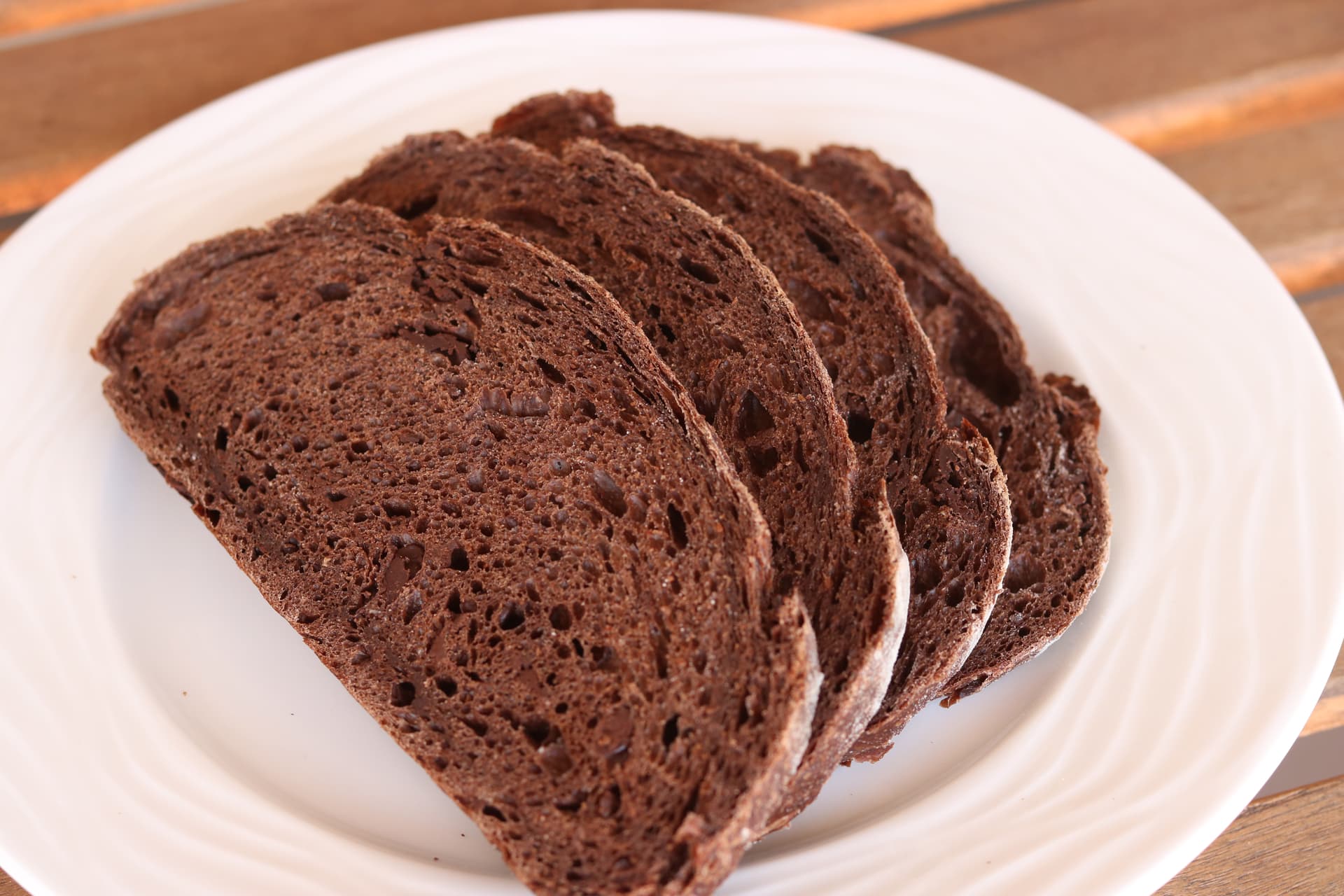
Description
Chocolatey sourdough boule that's dessert-y without being too sweet.
Ingredients
- 175 g of fed starter (100% hydration)
- 300 g of warm water (around 80 degrees Fahrenheit)
- 24 g organic pure maple syrup
- 375 g organic all-purpose flour
- 30 g organic whole wheat flour
- 38 g dutched baking cocoa
- 4 g ground espresso
- 8 g salt
- 90-120 g chocolate (60-70% cacao, roughly chopped)
*I like to use the Hu Salty Dark Chocolate
Instructions
- Feed starter and allow it to rise until approximately doubled in size (typically between 5-8 hours).
- Mix water, starter, and maple syrup in a large bowl until fully incorporated.
- Add flour, cocoa powder, ground espresso, and salt.
- Mix by hand (or with a mixer, but I prefer to work it by hand) until flour is fully combined and the dough is reasonably smooth.
- Cover with a damp towel and allow the dough to rest for around 30 minutes.
- Add the chocolate during the first set of stretch and folds. Add some of the chocolate on top of the dough, then grab an edge, stretch upward, and fold over to the other side of the bowl. The rotate and repeat, adding more chocolate each time. You'll repeat this approximately 4-5 times or until you've made your way all the way around the bowl. Then knead the dough for a few minutes to mix in the chocolate more evenly.
- Proceed with a few more rounds of normal stretch and folds every 30 minutes or so (same as described in step 6, without adding chocolate or kneading at the end).
- Cover the dough and allow it to rest until finished fermenting. At room temperature, this could take anywhere from 5-12 hours. The warmer your house is, the faster the dough will rise. Alternatively, you could cover the bowl with plastic wrap and put the dough in the refrigerator until you're ready to bake (this is called a cold ferment). There are multiple ways to tell when your dough is done fermenting. Here are a few tips: 1) the dough has significantly increased in size; 2) the dough jiggles when you shake it; 3) the dough is no longer sticky when you touch it.
- Once the dough is done fermenting, it's time remove it from the bowl and shape it. My preferred method for a traditional circular loaf is as follows: 1) Stretch the dough into an oval shape; 2) Beginning at a narrow end, roll the dough into a thick log; 3) Stretch the log longways, then roll the dough again, starting from a new narrow edge; *Note: At this point, you should have a mound of dough that is approximately as wide as it is long.* 4) Push the dough slightly away from you, cup the side farthest from you with your hands, then pull the dough back toward you; 5) Rotate and repeat step 4 until you've formed a smooth ball.
- Allow the shaped dough to proof at room temperature. You can use a floured proofing basket or place the dough on a piece of parchment paper. If you chose to let the dough ferment at room temperature during step 7, the proof time will likely fall between 30 minutes and 2 hours. If you did a cold ferment instead, you may want to leave the dough out for multiple hours as its temperature increases. Your dough is done proofing when: 1) the dough has risen slightly; 2) the dough jiggles; 3) if you poke it, it springs back slowly.
- While the dough is proofing, preheat your oven to 450 degrees Fahrenheit with the Dutch oven inside.
- Once the dough is done proofing, dust the top with flour, score it, then place it inside your preheated Dutch oven with the lid on.
- Place your loaf in the oven and allow it to bake for 40-55 minutes. The internal temperature of the bread should be between 200-210 degrees.
- Once your bread is finished baking, remove it from the Dutch oven and place on a rack to cool. I recommend letting it cool until it's no longer warm to the touch.
- Dig in!